Skip to content
Addis Abeba — Leaders of the Afar community in the Horn of Africa are reportedly looking to Israel for support amid growing security concerns and repression in the region, according to Israeli media outlet
The Afar, a Sunni Muslim tribe spread across Ethiopia, Eritrea, and Djibouti, have faced heightened threats from Iranian-linked actors, including Houthi recruitment networks and regional arms shipments. Eritrean Afar in particular report systematic abuses by the ruling People’s Front for Democracy and Justice (PFDJ), including killings, arbitrary arrests, forced displacement, and restrictions on livelihoods such as fishing.
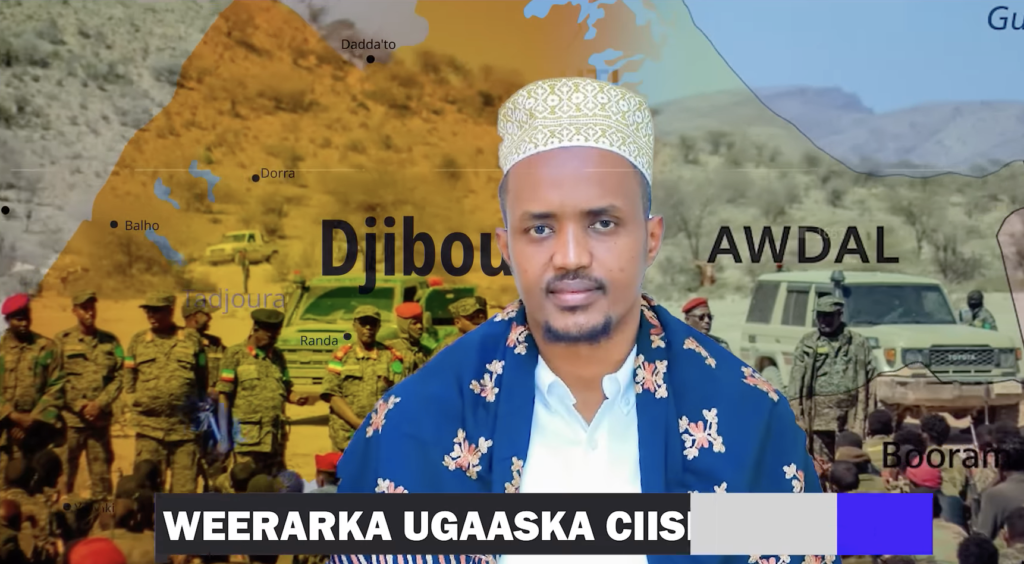
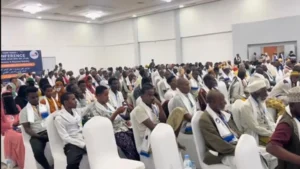
According to Ynet News, an Afar conference held in Ethiopia from 28 to 30 December 2025 brought together political figures, youth and women’s representatives, religious leaders, journalists, and human rights advocates from across Ethiopia, Eritrea, and Djibouti. The gathering aimed to unify efforts against repression in Eritrea and strengthen ties among Afar communities across borders. Delegates emphasized that Ethiopia and Djibouti could provide refuge and support for Afar fleeing oppression, while helping consolidate the tribe’s influence regionally.
The Afar homeland straddles a geopolitically sensitive corridor along the Red Sea, including Eritrea’s Dankalia region and the Bab el-Mandeb Strait, which lies opposite Houthi-controlled territories in Yemen. During the recent Gaza conflict, Houthi forces reportedly blocked Red Sea passages affecting Israeli shipping and related commercial vessels. The Afar source cited by Ynet News framed the crisis not only as a humanitarian issue but also as a strategic concern, noting that Iranian influence and regional instability directly affect Red Sea security and international trade routes.
The source added that Israel, as a democratic state with experience in Red Sea security and regional geopolitics, is uniquely positioned to provide support to the Afar, potentially helping establish local protection frameworks and limit external interference, even without formal recognition of new political entities.
While the idea of seeking Israeli engagement predates Israel’s recognition of Somaliland in late December 2025, the move has reportedly reinforced the belief among marginalized groups in the Horn that Tel Aviv could play a constructive role in addressing local grievances while supporting broader Red Sea security.
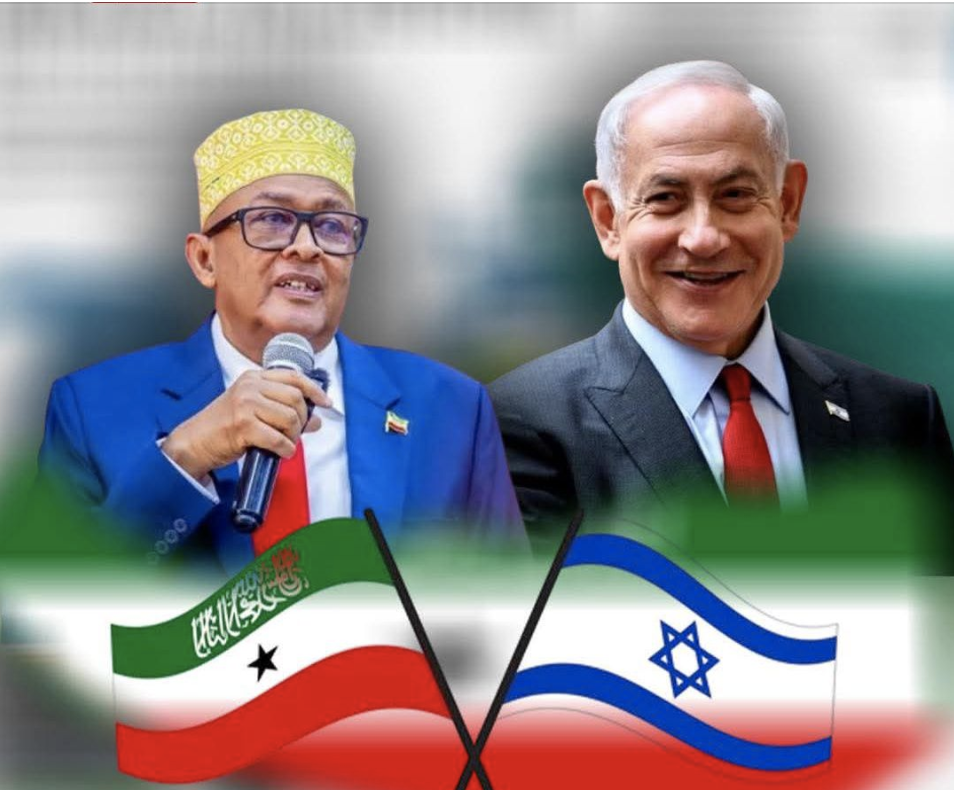
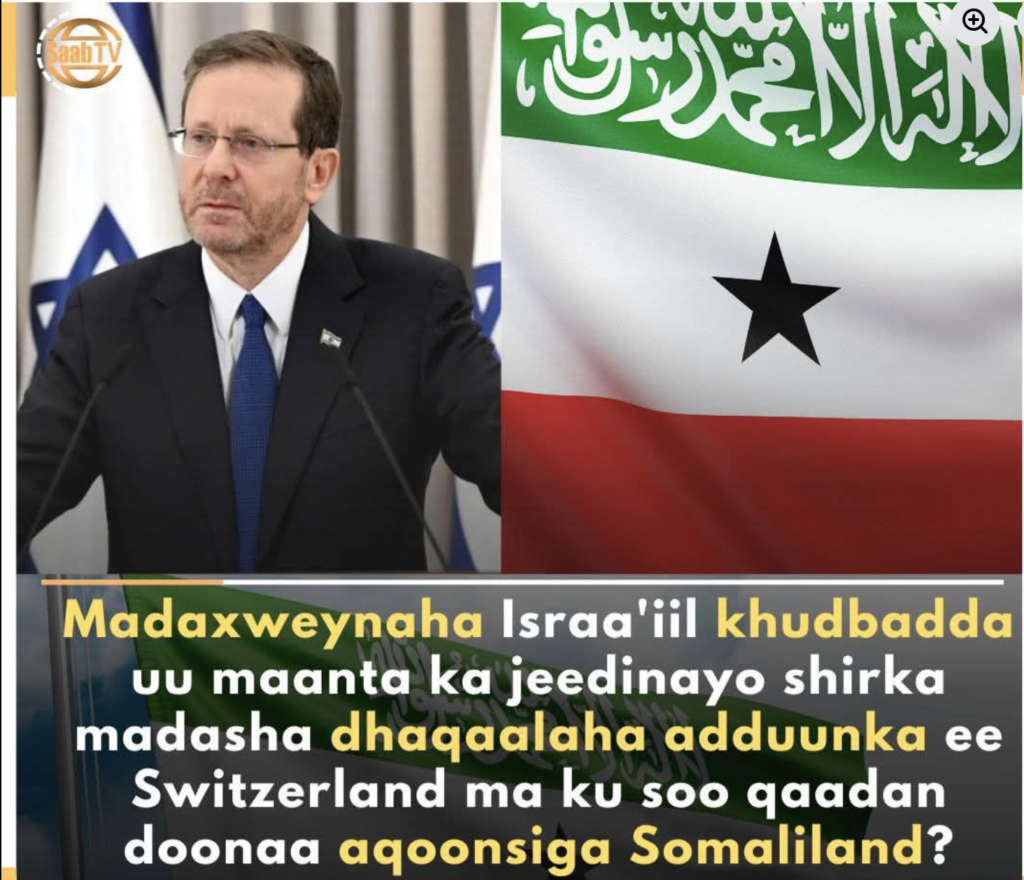
Israel announced on 26 December that it would officially recognize Somaliland, a region in northern Somalia that declared independence in 1991 but remains internationally unrecognized.
Following Israel’s announcement, It was reported that African Union, IGAD, Arab League, GCC and many countries reject Israel’s recognition of Somalia’s breakaway region of Somaliland.
The African Union and United Nations have consistently affirmed Somalia’s territorial integrity.
Likewise a bloc of 21 Arab, Islamic, and African states issued a joint statement on 27 December rejecting the recognition.
They condemned it as a “grave violation of international law and the United Nations Charter,” reaffirmed support for Somalia’s unity and sovereignty, and rejected any linkage of the measure to efforts to forcibly displace the Palestinian people.
Israel’s recognition of the Somaliland region as an independent state has now stirred what had been relatively still waters, prompting a flurry of diplomatic contacts among several countries in the Middle East and North Africa, foremost among them Egypt.
Recent reports indicate that the African Commission on Human and Peoples’ Rights (ACHPR) has formally received and registered a human rights complaint filed by the Red Sea Afar Democratic Organization (RSADO) against the State of Eritrea.
RSADO said the Commission confirmed its decision through official correspondence, designating the case Red Sea Afar Democratic Organization v. The State of Eritrea. The complaint, submitted on 4 June 2025, alleges widespread and systematic violations against the Indigenous Red Sea Afar people in Eritrea’s Dankalia region.
According to RSADO, the Afar community has long faced “state-engineered” abuses, including displacement, persecution, extrajudicial killings, enforced disappearances, and the confiscation of ancestral lands along the Red Sea coast. The group said these violations “are not historical relics” but continue under the current Eritrean authorities and ruling People’s Front for Democracy and Justice (PFDJ).
RSADO described the Commission’s move as an “overdue acknowledgment” of the severity of the Afar people’s situation, saying domestic avenues for justice in Eritrea are nonexistent.
In July 2025, Addis Standard reported that the Eritrean Afar National Congress (EANC), a political group opposing Eritrea’s government, announced plans to prepare for armed struggle against President Isaias Afwerki’s regime. Ali Mohammed Omer, a member of the EANC executive committee and spokesperson, said the group had opened an office in Semera, the capital of Ethiopia’s Afar Region, and intended to expand operations to Addis Abeba.
“The Ethiopian government has given us the opportunity to operate and speak,” he stated, adding that their return to the region signals a shift from diaspora-based advocacy to active mobilization on the ground.
Founded in Sweden in 2014, EANC says it has spent the last decade raising awareness about the plight of the Red Sea Afar people under the Eritrean regime.
According to Ali Mohammed, the group is now working to coordinate with local actors in the Horn of Africa as it readies for military engagement. He also claimed that Eritrean forces have recently mobilized near the Bure border area, suggesting the regime’s intent to destabilize Ethiopia.
EANC has also engaged in discussions with other Eritrean opposition groups, including Brigade Nhamedu, which has also declared its intention to forcibly remove the Eritrean government. The announcement comes two weeks after the Red Sea Afar Democratic Organization (RSADO), an Ethiopia-based armed insurgent group, held a public conference in Semera on 13 July. RSADO said its political and military campaign against the Eritrean government, pledging continued struggle until the People’s Front for Democracy and Justice (PFDJ) is dismantled and the Red Sea Afar people’s right to self-determination are recognized.